Content options
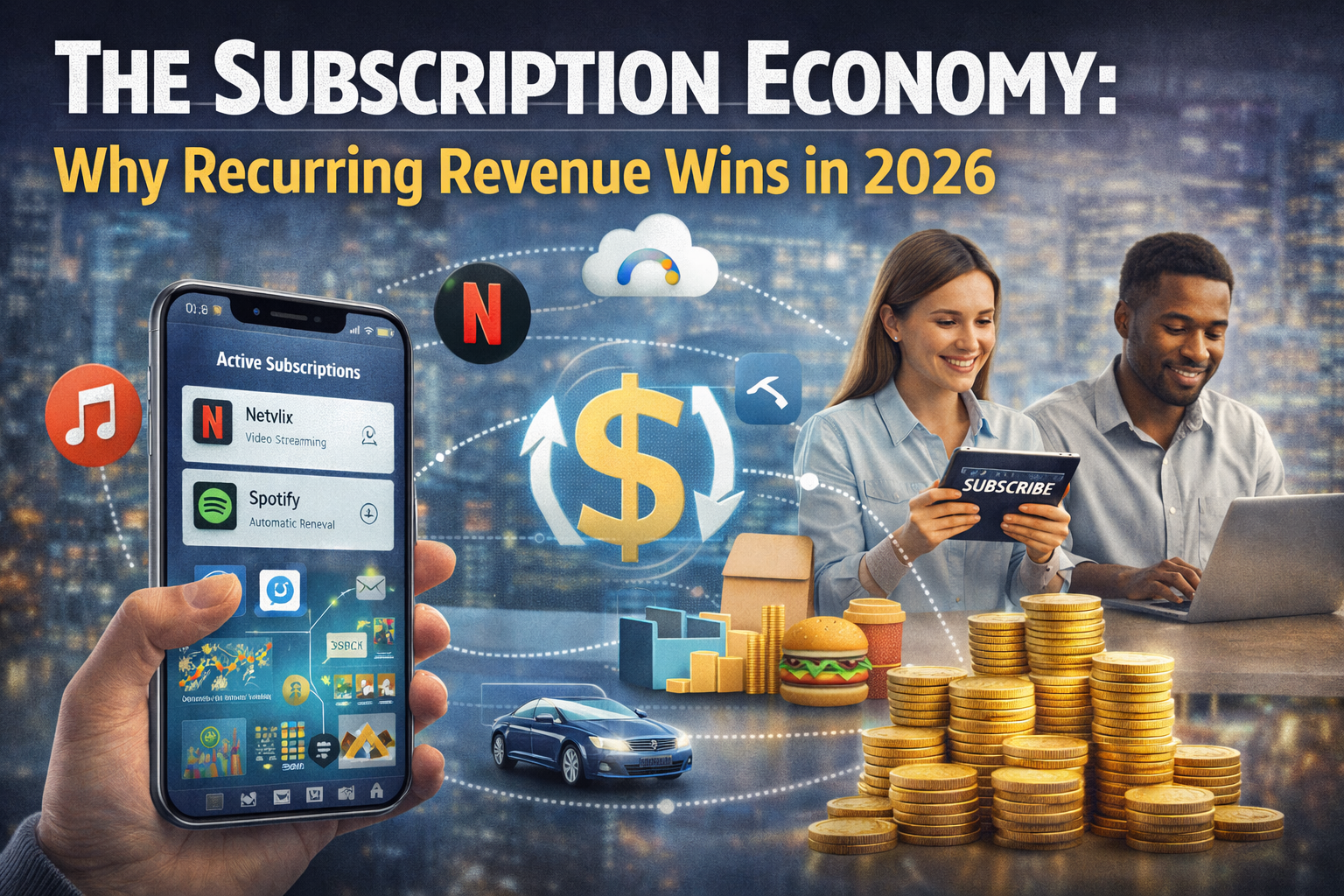
The subscription economy has fundamentally changed how businesses generate revenue and how consumers engage with products and services. In 2026, the global subscription business model market is valued at over $1.5 trillion — and it continues to grow at a compound annual rate that outpaces the broader economy. From software and media to groceries and fitness, recurring revenue models are no longer just a payment preference. They are a strategic advantage.
What Is the Subscription Economy?
The subscription economy refers to the broad shift from one-time transactional purchases to ongoing, membership-based access models. Customers pay a regular fee — weekly, monthly, or annually — in exchange for continued access to a product, service, or platform. This model, pioneered at scale by companies like Netflix, Spotify, and Salesforce, has now expanded into virtually every industry vertical.
The underlying premise of the membership economy is simple but powerful: predictable, recurring revenue is more valuable than unpredictable one-time sales. Businesses with strong subscription models can forecast revenue with greater accuracy, invest more confidently in growth, and build deeper, longer-lasting customer relationships.
The Rise of SaaS and Digital Subscriptions
The SaaS subscription growth wave was the first major driver of the subscription economy. Enterprise software moved from perpetual licenses to annual contracts, unlocking more predictable cash flows for vendors and reducing upfront costs for buyers. In 2026, SaaS subscription growth remains the dominant model in enterprise technology, with over 80% of new software products launching as subscription-first offerings.
Why Recurring Revenue Models Win
1. Predictability and Financial Stability
The most fundamental advantage of a recurring revenue model is financial predictability. Businesses know their baseline monthly or annual revenue — their Monthly Recurring Revenue (MRR) or Annual Recurring Revenue (ARR) — which makes budgeting, hiring, and investment planning dramatically more reliable. This stability is a core reason investors assign premium valuations to subscription economy businesses compared to transactional counterparts.
2. Higher Customer Lifetime Value
The subscription business model dramatically increases customer lifetime value (CLV) by extending the revenue duration of each customer relationship. Rather than a single transaction, a subscription customer generates revenue every month or year they remain subscribed. Companies with optimized subscription pricing strategies and strong onboarding experiences regularly achieve CLVs three to five times higher than equivalent transactional businesses.
3. Data-Driven Customer Insights
Subscription relationships generate continuous behavioral data. Every login, feature use, support ticket, and engagement event becomes signal data that businesses can use to improve products, reduce churn, and identify upsell opportunities. This data flywheel is one of the most underappreciated advantages of the membership economy — and it compounds over time as datasets grow richer with every billing cycle.
Subscription Economy Trends Shaping 2026
The subscription economy trends dominating 2026 include the rise of bundled subscriptions (companies like Apple and Amazon offering multi-service bundles), hybrid pay-per-use models that combine a base subscription with usage-based charges, and AI-powered subscription pricing strategies that dynamically adjust offers based on individual customer behavior and willingness to pay.
Another significant trend is the growth of B2B subscriptions beyond software — including subscription-based professional services, equipment-as-a-service, and even raw materials delivered on recurring contracts — expanding recurring revenue models far beyond their digital origins.
Challenges in Building a Subscription Business
The subscription business model is not without its challenges. Churn — the rate at which customers cancel their subscriptions — is the central metric of health in the subscription economy. Businesses must continuously deliver value to justify the recurring charge. Subscription revenue statistics show that the average SaaS company loses 5–7% of its customer base annually to churn, making retention strategy just as important as acquisition.
Subscription fatigue is also emerging as a genuine consumer behavior trend. As the number of subscription services proliferates, customers are becoming more selective, forcing businesses to demonstrate clear, ongoing value to remain in the monthly budget. This makes a thoughtful subscription pricing strategy and consistent product improvement essential for long-term success in the membership economy.
Frequently Asked Questions
Q1. What is the subscription economy?
The subscription economy is the broad shift from one-time purchases to ongoing, membership-based business models where customers pay a recurring fee for continued access to products or services.
Q2. Why is recurring revenue better than one-time sales?
A recurring revenue model provides financial predictability, higher customer lifetime value, richer behavioral data, and stronger investor valuations compared to transactional, one-time purchase models.
Q3. What industries are growing fastest in the subscription economy?
The fastest-growing sectors in the subscription economy trends of 2026 include SaaS, streaming media, health and wellness, e-commerce subscription boxes, B2B professional services, and equipment-as-a-service.
Q4. How do you reduce churn in a subscription business?
Reducing churn in a subscription business model requires delivering continuous product value, proactive customer success outreach, personalized subscription pricing strategies, and early identification of at-risk customers through behavioral data signals.
Q5. What is subscription fatigue?