Content options
The future of driving is here, and it is moving fast. Self-driving cars are no longer a science fiction dream. Companies like Waymo, the autonomous vehicle arm of Google's parent company Alphabet, are already putting driverless robotaxis on real roads in American cities. And their CEO, Tekedra Mawakana, has a clear message for people worried about jobs: the rise of autonomous vehicles will create new opportunities, not just take them away.
This is big news for car enthusiasts, auto workers, tech professionals, and everyday people who want to understand where the automobile industry is headed. Whether you love cars for their engines or their software, the driverless car era is about to change everything. Let us break it all down in simple, clear language.
Who Is Tekedra Mawakana and Why Does Her Voice Matter?
Tekedra Mawakana serves as the Co-CEO of Waymo alongside Dmitri Dolgov. She brings deep experience in technology policy, legal affairs, and corporate leadership. Before joining Waymo, she held senior positions at Yahoo and AOL. Her background gives her a unique view of how technology reshapes industries and workforces over time.
When Mawakana speaks about autonomous vehicles and jobs, she is not just offering an opinion. She leads one of the most advanced self-driving car programs in the world. Waymo's vehicles have logged over 20 million miles of autonomous driving on public roads, a number that grows every single month. Her words carry the weight of real data and lived industry experience.
What Exactly Did She Say About Driverless Cars and Jobs?
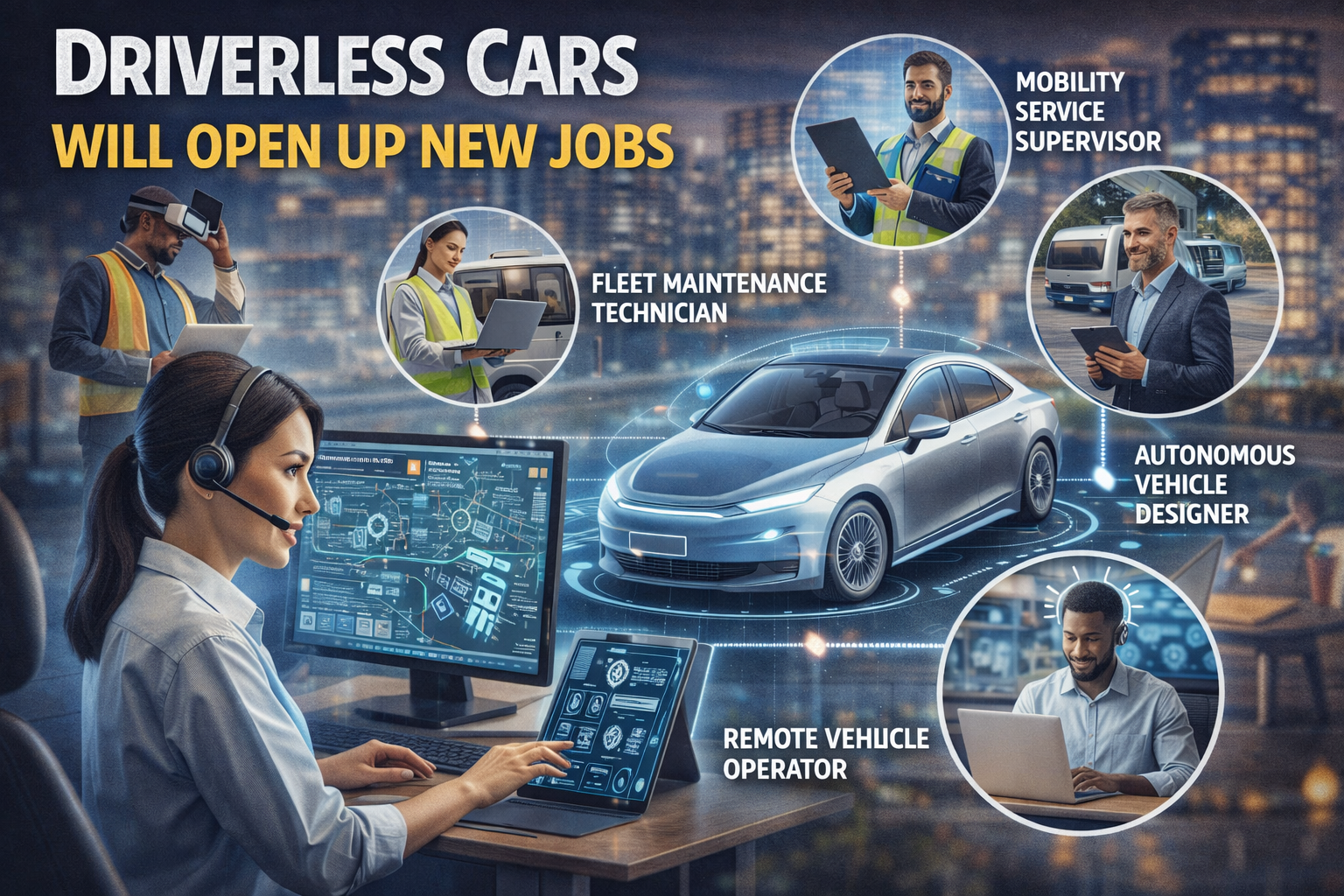
Mawakana has consistently made the case that autonomous vehicle technology will generate a new category of jobs that simply did not exist before. She points to several key areas where employment will grow as self-driving cars become more common on the roads.
She emphasizes that while some traditional driving roles will shift, the technology behind driverless cars requires a large and highly skilled workforce. Engineers, safety monitors, fleet coordinators, data analysts, and robotics specialists are all in growing demand because of companies like Waymo.
New Jobs That Driverless Cars Will Create
Many people worry that self-driving cars will wipe out jobs for millions of truck drivers, taxi drivers, and delivery workers. That concern is real and valid. But the full picture is more complex and, in many ways, more hopeful. Here are the new types of jobs that autonomous vehicle companies already need and will need much more of in the future.
1. Remote Vehicle Operators
Even fully autonomous cars need human oversight. Remote vehicle operators sit at monitoring stations and can take control of a self-driving car if it encounters a situation it cannot handle on its own. This is a brand new job category that did not exist ten years ago.
2. Autonomous Vehicle Technicians
Self-driving cars are loaded with LiDAR sensors, radar systems, cameras, and complex computer hardware. Trained technicians who understand both mechanical systems and advanced electronics are needed to maintain, repair, and calibrate these vehicles. Traditional auto mechanics will need to upskill, and a new wave of specialist roles will emerge.
3. AI and Machine Learning Engineers
The brain of a driverless car is its software. Teams of AI engineers and machine learning specialists train the algorithms that help vehicles recognize traffic lights, pedestrians, road signs, and unexpected obstacles. This is one of the fastest-growing job categories in the entire technology sector.
4. Fleet Operations Managers
Managing a large fleet of autonomous robotaxis requires dedicated operations teams. These professionals handle logistics, route planning, maintenance scheduling, and real-time performance monitoring. As companies like Waymo scale up, they need hundreds of fleet managers across every city they operate in.
5. Safety and Compliance Specialists
Governments around the world are creating new regulations for autonomous vehicles. Companies need legal and safety experts who understand both technology and policy. These professionals ensure that driverless cars meet safety standards and that companies operate within the law.
6. Customer Experience Coordinators
Riding in a driverless car is a new experience for most people. Companies need customer support teams who can help users feel comfortable, resolve issues, and gather feedback. This creates jobs in hospitality-style roles within a tech-driven industry.
| New Job Category | Skills Required | Avg. US Salary Range | Growth Outlook |
|---|---|---|---|
| Remote Vehicle Operator | Monitoring systems, quick decision making | $40,000 – $65,000 | Very High |
| AV Sensor Technician | Electronics, calibration, mechanics | $55,000 – $85,000 | High |
| AI / ML Engineer | Python, neural networks, data science | $110,000 – $180,000 | Very High |
| Fleet Operations Manager | Logistics, project management | $65,000 – $95,000 | High |
| Safety and Compliance Specialist | Law, automotive safety standards | $75,000 – $120,000 | High |
| Customer Experience Coordinator | Communication, tech support | $38,000 – $58,000 | Moderate |
Where Is Waymo Right Now?
Waymo currently operates commercial robotaxi services in San Francisco, Phoenix, and Los Angeles. Users can hail a driverless car through the Waymo One app, sit back, and be driven to their destination with no human driver behind the wheel. According to NHTSA data, Waymo's vehicles have recorded fewer serious incidents per mile driven than the average human driver, which makes a strong case for the safety of the technology.
In 2025, Waymo announced plans to expand to new US cities and eventually to international markets. This expansion will require hiring thousands of new employees across all the categories listed above. The company already employs over 3,500 people and continues to grow rapidly.
What About the Auto Loan and Finance Angle?
Here is something most people do not think about right away. As driverless cars become more mainstream, they will change how people think about car ownership, and that directly affects the auto title loan industry and personal vehicle finance.
Right now, millions of Americans rely on personal vehicles for their daily lives. They take out auto loans, refinance their cars, and sometimes use auto title loans as a short-term financial tool. As autonomous vehicles enter the mainstream, we will see a shift in car ownership patterns. Some people may choose to rely on robotaxi services instead of owning a car. Others may buy autonomous vehicles, which will likely carry higher price tags, increasing the average loan amount and creating new financial products.
The Consumer Financial Protection Bureau (CFPB) has already begun studying how autonomous vehicle adoption could affect consumer lending. The auto finance industry will need to adapt, and that adaptation will create new roles in insurance underwriting, vehicle valuation, and lending compliance.
The Bigger Picture: Autonomous Vehicles and the Economy
The World Economic Forum projects that automation and AI technologies could displace around 85 million jobs globally by 2025 but also create 97 million new roles. Autonomous vehicles are a central part of that transformation. The key word here is transformation, not elimination.
Think of it this way. When the automobile first became popular in the early 1900s, it put horse-drawn carriage drivers and blacksmiths out of work. But it also created millions of jobs in car manufacturing, road construction, gas stations, motels, and the entire highway service economy. We are seeing a similar pattern now, just moving much faster.
- The global AV market is projected to reach over $556 billion by 2026 according to Allied Market Research.
- The US Bureau of Labor Statistics already tracks growing demand for "automated vehicle system operators" as a new occupational category.
- Electric and autonomous vehicle companies added over 220,000 jobs in the US in 2024 alone.
- States like California, Arizona, and Texas are investing heavily in AV infrastructure, creating thousands of public sector jobs alongside private sector growth.
What Car Enthusiasts and Auto Workers Should Do Now
If you love cars and work in the automobile sector, the best thing you can do is stay curious and keep learning. The core passion for vehicles does not change. What changes is the skill set needed to work with them. Here are some practical steps to future-proof your career in the age of autonomous vehicles.
- Learn about electric vehicle systems. Most autonomous cars are also EVs. Understanding battery systems, charging infrastructure, and electric drivetrains will make you far more valuable in the job market.
- Get familiar with data and technology basics. You do not need to become a software engineer overnight, but knowing how to read vehicle data, use fleet management software, or understand sensor outputs will open many doors.
- Explore certification programs. Many community colleges now offer courses in automotive technology that include autonomous and electric vehicle modules. Organizations like the ASE (Automotive Service Excellence) are expanding their certification catalog to cover new technologies.
- Follow industry news closely. Companies like Waymo, Tesla, Cruise, and Aurora are constantly announcing new developments. Staying informed helps you spot new opportunities early.
- Think about adjacent roles. You do not have to be a programmer to work in the AV industry. Roles in safety, policy, customer service, logistics, and even content creation around autonomous vehicles are all growing fast.
Common Concerns About Driverless Cars and Jobs
It is fair to feel uncertain. Whenever technology changes an industry this quickly, real people face real challenges. Here are some of the most honest concerns and what the data says about them.
| Concern | Reality Check |
|---|---|
| Truck and taxi drivers will lose all their jobs overnight | Full autonomous deployment will take 10 to 20 years. Transition will be gradual, not sudden. |
| Only tech workers will benefit from AV growth | New roles span mechanics, logistics, safety, law, and customer service — not just coding. |
| Small towns will not see any AV jobs | AV expansion into rural delivery and transport will create jobs in smaller communities too. |
| AV cars are still not safe enough | Waymo's safety data shows fewer crashes per mile than average human drivers. |
Frequently Asked Questions (FAQs)
1. Will driverless cars really create new jobs, or is that just marketing talk?
2. How long will it take for driverless cars to become common everywhere?
3. What skills should auto workers learn to stay relevant in the AV era?
4. Is Waymo profitable?
5. How will autonomous vehicles affect auto title loans and car ownership?
6. What cities can I use a Waymo robotaxi right now?
Final Thoughts: The Road Ahead Is Full of Opportunity
The driverless car revolution is not a threat to the working world. It is a transformation of it. Waymo CEO Tekedra Mawakana has made it clear that autonomous vehicles will open doors to new careers, new industries, and new ways of thinking about transportation. For car lovers, auto workers, and anyone who has ever been fascinated by the future of mobility, this is one of the most exciting chapters in the history of the automobile.
Yes, change is never easy. Some jobs will shift. Some roles will disappear. But new ones will take their place, and many of them will pay better, demand more creativity, and offer more stability than the driving jobs of the past. The smartest move for anyone in or around the auto sector is to stay informed, stay curious, and start building the skills that the driverless future will reward.
For more in-depth coverage on auto finance, vehicle technology, and how emerging trends affect your wallet and your career, keep following BlogofTime.com, your trusted source for finance news that matters in the real world.