Content options
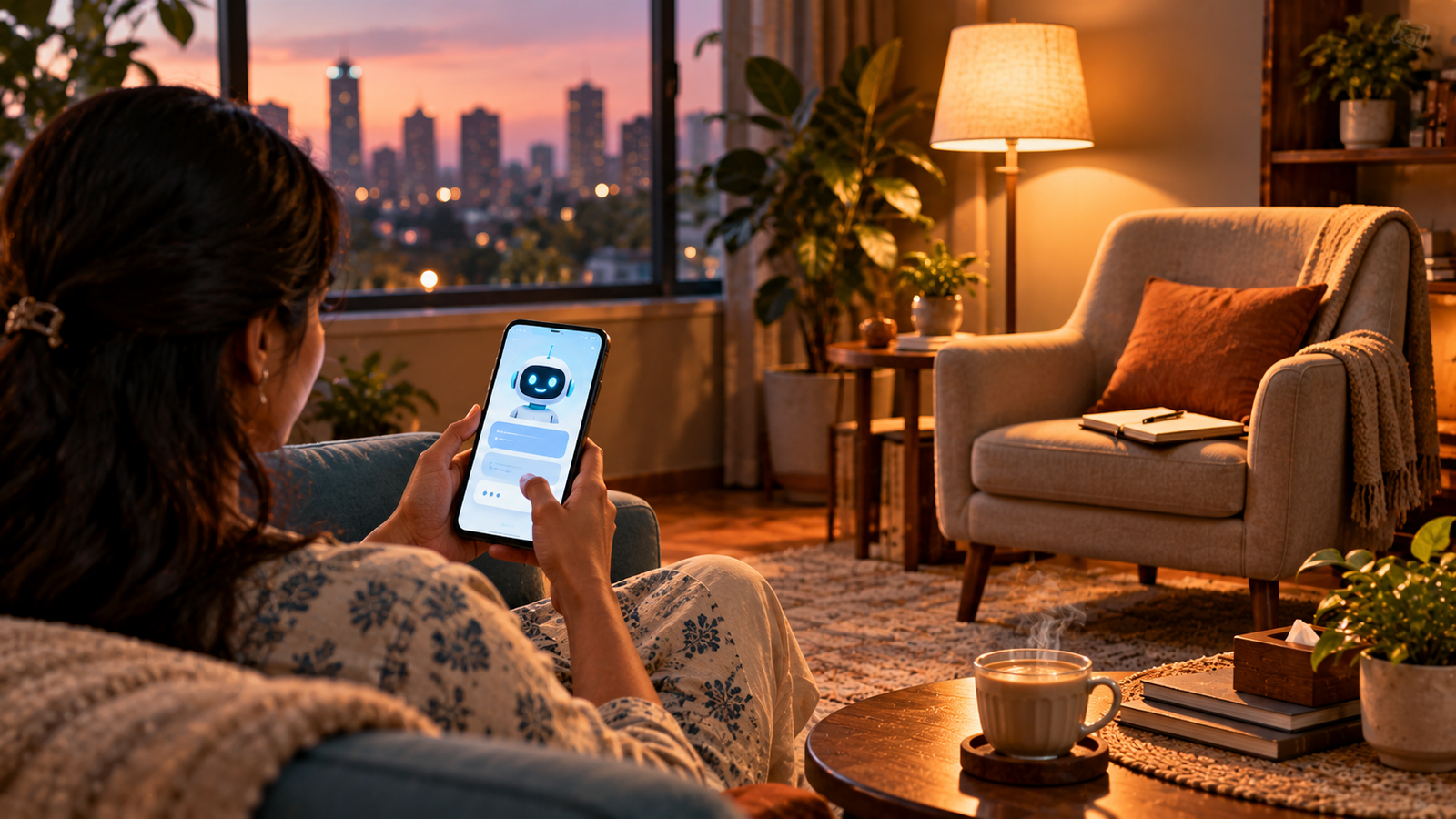
An AI therapist chatbot can be a useful support tool for everyday stress, mood tracking and practising coping skills, but it is not a therapist. It cannot diagnose you, take clinical responsibility for your care, or reliably handle a crisis. For most people, the sensible position is to use it as a supplement to human help, never as the only line of defence.
Interest in this is growing. Media features such as DW's piece titled "My therapist is AI" show how many people now turn to chatbots for emotional support, and lawmakers in places such as California are reportedly working on rules for AI more broadly. The technology is moving faster than the safeguards. That is the reason to know what you are using.
Key takeaways
- AI chatbots suit mild, everyday needs: venting, reflection, structured exercises and between-session practice.
- They are a poor fit for suicidal thoughts, abuse, psychosis, eating disorders, severe depression or any emergency.
- Check privacy, who built the tool, and whether it points you to real help before you share anything personal.
- If a chatbot makes you feel worse, more dependent or more isolated, stop and talk to a human professional.
What does an AI therapist chatbot actually do?
Most mental-health chatbots are software that talks with you in text, and sometimes voice. Some follow scripted exercises based on cognitive behavioural therapy (CBT), such as spotting unhelpful thoughts. Others use large language models, the same kind of technology behind general chatbots, to produce open-ended replies.
That difference matters. A scripted tool is predictable but limited. A generative tool feels more human and flexible, yet it can also say something wrong, overconfident or unhelpful, because it predicts plausible words rather than understanding your life.
Neither type holds a licence, carries professional accountability, or sees your tone, body language and history the way a trained clinician does.
What can AI be good for?
Used with realistic expectations, a chatbot can do some things well.
- Availability. It answers at 2 a.m., when a therapist or friend is asleep.
- Low pressure. Some people find it easier to type out embarrassing thoughts to software first.
- Practice. It can walk you through breathing exercises, thought records or a worry-time routine.
- Reflection. Answering gentle prompts can help you put a vague feeling into words.
- Cost. Many tools are free or cheap compared with regular therapy.
These are real benefits, particularly where therapists are scarce or expensive. They are support functions, though, not treatment.
What can't it do?
The limits are more important than the strengths.
It cannot assess risk reliably
A human clinician notices when your words say "I'm fine" and your voice says otherwise. A chatbot only sees the text you type. It may miss signs of danger or respond to them in a clumsy, even harmful, way.
It cannot diagnose or prescribe
Low mood can come from depression, thyroid problems, grief, burnout, poor sleep or something else. Sorting that out needs a qualified professional, often a psychiatrist or clinical psychologist.
It can agree with you too easily
Some chatbots are tuned to be pleasant and affirming. Good therapy sometimes means gently challenging your thinking. A tool that mostly validates you can reinforce a distorted belief instead of loosening it.
It has no duty of care
A licensed therapist works under professional ethics and, in many countries, legal rules about confidentiality and reporting. A chatbot company's terms of service are a different thing, and usually far weaker.
What does the research say?
The evidence is early and mixed. Some small and mid-sized studies of purpose-built, CBT-style chatbots have reported reductions in symptoms of mild to moderate depression and anxiety over a few weeks. One widely reported randomised trial of a generative AI therapy chatbot was published in NEJM AI in 2025 by a Dartmouth team, with encouraging results, but it was a single study in a specific group.
Several limits apply to this research. Trials tend to be short, often involve people with mild symptoms, and are sometimes run by the companies that built the tool. Almost none compare AI against a good human therapist over the long term. General-purpose chatbots, which many people actually use, are not the tools that were tested.
A fair reading is that structured, well-designed tools may help some people with mild symptoms. There is not enough evidence to say AI can replace therapy.
AI vs human therapist: how do they compare?
| Factor | AI chatbot | Human therapist |
|---|---|---|
| Availability | 24/7, instant | By appointment, may have waiting lists |
| Cost | Free to low monthly fee | Higher per session |
| Diagnosis | No | Yes, if qualified |
| Crisis handling | Unreliable | Trained to assess and respond |
| Accountability | Company terms only | Professional ethics and licensing |
| Personalisation | Based on what you type | Based on history, tone, behaviour and relationship |
| Privacy | Varies, often unclear | Confidentiality norms and rules |
A worked cost example
Cost is a real reason people try AI, so here is an illustrative comparison. The figures are assumptions for the arithmetic, not quotes. Therapy fees in India vary widely by city and qualification, and sessions often fall somewhere around ₹1,000 to ₹3,000.
- Weekly therapy at ₹1,500 per session: 4 sessions × ₹1,500 = ₹6,000 a month.
- A paid chatbot subscription at, say, ₹500 a month: ₹500.
- Difference: ₹6,000 − ₹500 = ₹5,500 a month.
The saving is real, but the two are not the same product. A middle path many people find workable is fortnightly therapy (2 × ₹1,500 = ₹3,000) plus a chatbot for daily exercises (₹500), about ₹3,500 a month. Ask your therapist whether that suits your case.
Warning signs: when should you stop using it?
Stop, or at least pause, and speak to a human if any of these apply.
- You are having thoughts of harming yourself or others.
- The chatbot gives advice about medication, diagnosis or ending a relationship that you are tempted to follow.
- You feel worse after most conversations, or more anxious about what it said.
- You are skipping time with friends, family or a therapist to talk to the bot.
- You feel you cannot make a decision without checking with it first.
- It claims to be a licensed professional or promises a cure.
If you are in immediate danger, contact local emergency services or a crisis line. In India, the government's Tele-MANAS service is available at 14416 or 1800-891-4416. Please confirm the number is current before relying on it.
How do you choose a tool? A checklist
- Check who made it. Look for clinicians or researchers involved and a clear company identity.
- Read what it says about limits. A good tool states that it is not a replacement for therapy and explains what to do in a crisis.
- Look at the privacy policy. Find out what it stores, whether it shares data with advertisers or third parties, and whether you can delete your history.
- Look for evidence. Published studies are a better sign than testimonials, though be cautious if the makers ran them.
- Test its crisis response. Without sharing real details, see whether it points to human help when the conversation turns serious.
- Be wary of intense bonding. Tools built to feel like a friend or partner can encourage dependence.
- Keep it simple. Avoid sharing your full name, address, employer or financial details.
How can you use AI for anxiety more safely?
If you decide to try it, treat it like a workbook rather than a confidant.
- Pick one narrow goal, for example calming pre-exam worry or learning a breathing exercise.
- Set a time limit, such as 15 to 20 minutes a session.
- Ask for general techniques, not diagnoses. "Give me three grounding exercises" is safer than "Do I have an anxiety disorder?"
- Cross-check anything medical or clinical with a doctor or qualified therapist.
- Track whether you actually feel better after two to four weeks. If not, change approach.
Basics still matter. Poor sleep makes anxiety worse, and our guide to sleep hygiene habits covers steps that cost nothing. If work worries are driving your stress, our look at how AI is changing jobs may help you separate real risks from noise.
Myth vs fact
- Myth: A chatbot is private because nobody is watching.
Fact: Your messages are processed by a company and may be stored. Privacy depends on its policy and its security. - Myth: If it sounds caring, it understands me.
Fact: It generates caring-sounding language. That can still feel comforting, but it is not clinical understanding. - Myth: AI therapy is only for people who cannot afford real therapy.
Fact: Many people use it alongside therapy for practice between sessions. - Myth: If a chatbot did not flag a problem, I am fine.
Fact: It can miss things. Your own sense that something is wrong counts for more.
A note for readers in India
Access is a major reason AI looks attractive here. Mental-health professionals are concentrated in big cities, stigma can make people avoid clinics, and many families do not have insurance that covers therapy. Online counselling with a qualified professional, in your own language, is often a better first step than a chatbot, and the price gap may be smaller than you expect. India's Mental Healthcare Act, 2017 gives people a legal right to access mental-health care, though how this works in practice varies by state.
If you use an app, check whether its data is stored overseas and whether it supports your language well. Misunderstood idioms can lead to poor replies.
FAQ
Is AI therapy safe?
It can be reasonably safe for mild stress when you use a well-designed tool, protect your personal data and keep realistic expectations. It is not safe as the only support for a crisis, serious illness or complex trauma.
Can an AI chatbot replace a therapist?
Current evidence does not support that. Early studies suggest some benefit for mild symptoms, but chatbots cannot diagnose, take clinical responsibility or reliably manage risk.
Are ChatGPT-style chatbots the same as mental-health apps?
No. General chatbots are built to answer all kinds of questions and were not designed or tested as therapy tools. Purpose-built mental-health apps usually have narrower scope, clinical input and crisis features, though quality varies.
Is it safe to share personal secrets with a chatbot?
Share cautiously. Read the privacy policy, avoid identifying details, and assume anything you type could be stored. If something is sensitive enough to worry you, talk to a licensed professional who is bound by confidentiality.
Who should avoid AI therapy tools?
Anyone in crisis, or with symptoms such as suicidal thoughts, hearing voices, severe panic, an eating disorder or a history of serious mental illness, should seek a qualified human professional first. Children and teenagers should use such tools only with a parent or guardian involved.
Bottom line
An AI therapist chatbot works best as a practice partner for small, everyday struggles, not as a stand-in for a trained clinician. If you try one, keep your data minimal, set time limits and watch how you feel. If things are not improving, or you see any warning sign above, book a session with a licensed psychologist or psychiatrist, or call a crisis line, this week.