Content options
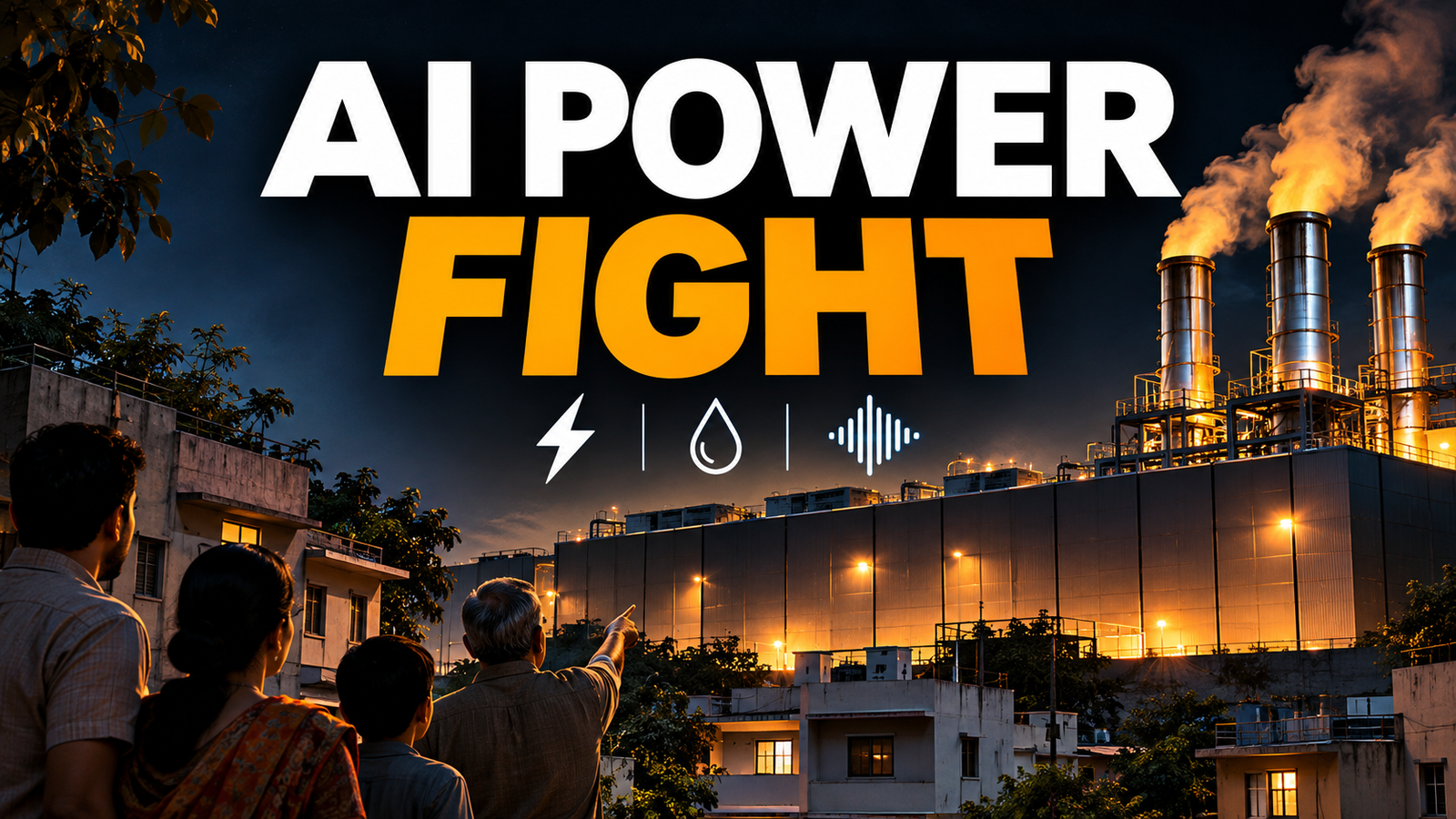
Neighbours are suing because an AI data centre that makes its own electricity on site can bring turbine noise, exhaust emissions and heavy demand on local infrastructure to a residential area. According to reports, the case centres on the power plant serving Elon Musk's Colossus AI facilities. One resident, Loretta Thornton, was described by The Tennessean as living steps from the sprawling Colossus 2 site.
This guide explains the general mechanics: why AI sites build their own power, what residents typically worry about, and what you can check before you object. We have not independently verified the court filings, so we keep case details minimal and focus on the parts that apply to any AI data centre near homes.
Key takeaways
- AI data centres use power around the clock, so some developers install on-site gas turbines instead of waiting years for a grid connection.
- Neighbours usually raise four issues: air emissions, noise, water use and the effect on electricity prices.
- Permits, zoning records and tariff filings are public in most places, and they are the strongest evidence a resident can bring.
- A site visit or a feeling that something is loud is not enough on its own; measured data and permit conditions carry more weight.
What is the AI data centre power plant lawsuit about?
Reports from Open Magazine and The Tennessean describe neighbours taking Musk's AI power plant to court over the effects of the Colossus facilities in the American South. The broad complaint, as reported, is that a huge computing site and its power supply sit close to where people live.
Colossus is the name of the AI training cluster built by Musk's company xAI. Colossus 2 is the later, larger site. The exact claims, the court, the legal basis and what the neighbours are asking for are details to confirm from the filings and the original reports. A lawsuit is a claim, not a finding, and the company's side matters as much as the neighbours'.
Why would an AI data centre build its own power plant?
Speed is the main reason. Connecting a very large load to the grid can take years, because utilities must build lines, substations and sometimes new generation. AI developers are racing to switch on chips, so many look at gas turbines or engines they can install in months.
Reliability is the second reason. Training an AI model can run for weeks, and a power cut wastes expensive computing time. On-site generation gives the operator control.
The trade-off lands on neighbours. A grid-connected data centre is mostly a quiet building. A site with turbines is also a small power station, with exhaust stacks, fuel supply and constant mechanical noise.
How do AI data centres affect electricity bills?
The effect depends on how the site is supplied. If it draws from the public grid, the utility may need new capacity, and regulators decide how those costs are shared between the big customer and everyone else. If it generates its own power, the bill risk for neighbours is smaller, but the site may still connect to the grid as a backup.
Many places now use special tariffs for very large users, so that the data centre pays for the infrastructure built for it. Whether that protects households depends on the exact rules, which you can read in the utility's filings.
A worked example: how big is 100 MW?
Take a hypothetical data centre drawing a steady 100 megawatts. This is an illustration, not a figure for Colossus.
- Energy per year: 100 MW × 24 hours × 365 days = 876,000 MWh, which is 876 million kWh.
- Assume a typical Indian home uses about 250 kWh a month, or 3,000 kWh a year (an assumption for illustration).
- Homes equivalent: 876,000,000 ÷ 3,000 = 292,000 homes.
- At an illustrative ₹7 per kWh, the yearly bill is 876,000,000 × 7 = ₹613.2 crore.
So one mid-sized AI site can use as much electricity as a city of several lakh homes. That scale explains why a single project can change a local utility's planning.
What do neighbours say about noise and air?
Gas turbines produce a low, steady hum and sometimes tonal whine that carries further at night, when background sound drops. Cooling fans and transformers add to it. Low-frequency noise is hard to block with ordinary windows, which is why residents often describe it as a pressure or vibration rather than a loud sound.
On air quality, burning gas releases nitrogen oxides and, depending on the equipment, other pollutants. Regulators set permit limits on these for each unit. The disputes often turn on whether temporary or portable units needed permits, how many were running, and whether limits were met. Those are questions for the permit record, not for guesswork.
How does an AI data centre use water?
Water use depends on the cooling design. Evaporative cooling towers consume large volumes of water. Closed-loop liquid cooling uses much less but needs more electricity. Power plants add their own needs, since some designs use water for cooling or emissions control.
Residents in dry regions worry about competition with households and farms. The useful question is not whether a data centre uses water, but how much, from which source, and whether the supply is drinking-water grade or recycled.
Which impact matters most? A quick comparison
| Issue | What residents notice | What to check |
|---|---|---|
| Electricity | Worry about higher bills or grid strain | Utility tariff filings, regulator orders on large loads |
| Noise | Constant hum, worse at night | Permitted noise limits, any measured readings |
| Air | Smell, haze, health concerns | Air permits, number and type of turbines, monitoring reports |
| Water | Pressure or supply worries | Water supply agreement, cooling design, source |
What can residents check before objecting?
A strong objection rests on documents. Here is a practical order of work.
- Find the zoning status. Check whether the land is zoned for industrial use and whether a variance or special permit was needed.
- Read the air permit. It lists the equipment, fuel, pollutant limits and monitoring duties. In the United States, the EPA and state agencies publish permit information.
- Look at the power arrangement. Is the site on the grid, on its own generation, or both? Utility regulator dockets show special contracts.
- Check water sources. Ask the local water board for the supply agreement and expected daily volume.
- Record noise properly. Use a decibel meter app as a rough log with dates and times, but treat it as supporting evidence, not proof.
- Attend the public hearing and submit written comments. Comments filed within the deadline become part of the record.
- Speak to a local lawyer or an environmental group before you plan any legal action.
Common mistakes when objecting to a data centre
- Relying on rumours about emissions or water use instead of reading the permit.
- Missing the comment deadline, which can close off later appeals.
- Treating a data centre and a power plant as the same thing when they are regulated separately.
- Posting health claims without medical or monitoring data behind them.
- Going alone when neighbours can pool costs and evidence.
Myth vs fact
Myth: All AI data centres raise local power bills. Fact: It depends on who pays for new infrastructure and how the tariff is written. Some regulators now make large users carry those costs.
Myth: A data centre with its own power plant takes nothing from the grid. Fact: Many keep a grid connection as a backup or for part of their load.
Myth: Every data centre is noisy. Fact: Noise depends mostly on on-site generation and cooling equipment, and a well-sited building with sound controls can be quiet.
Does this matter in India?
Yes, as India adds data centres in cities such as Mumbai, Chennai and Hyderabad, and global firms expand their local operations, as we explained in our guide to global capability centres in Hyderabad. Indian projects need state pollution control board consent, and large diesel generator sets for backup fall under emission rules. The Central Pollution Control Board publishes norms, and state boards handle consents. Residents can ask for the consent to establish and consent to operate documents, and use the public hearing process where it applies.
Power tariffs for large industrial users in India are set by state electricity regulatory commissions, so rules differ by state. Whether a given Gujarat or Maharashtra project needs a public hearing depends on its size and category, so check with the state board.
The pressure behind these projects is the AI spending wave. If you want the money side, our piece on whether the AI boom is slowing covers what is driving demand, and how AI is changing jobs covers why the build-out matters beyond the neighbourhood.
FAQ
Why are neighbours suing over an AI data centre?
Reports say residents near Colossus are challenging the site's power plant. Typical grounds in such cases include air pollution, noise, permit compliance and effects on the community. The exact claims should be read from the court filings.
Is Colossus the same as Grok?
No. Colossus is the computing cluster built by xAI to train its models. Grok is the chatbot product that those models power.
Do AI data centres really increase electricity bills for homes?
They can, if the cost of new grid capacity is spread across all customers. Many regulators are now creating separate tariffs so large users pay for what they cause. Check your own utility's filings.
How much water does an AI data centre use?
It varies widely with the cooling system and climate. Evaporative cooling uses far more water than closed-loop designs. Ask the operator and the water authority for the planned daily volume rather than relying on general averages.
Can residents stop a data centre from being built?
Sometimes they can delay or change a project through zoning hearings, permit appeals or court action, but outcomes depend on local law and evidence. A local lawyer or environmental group can advise on your options.
Bottom line
The AI data centre power plant lawsuit shows what happens when a very large computing site brings its own industrial-scale power next to homes. For most residents, the sensible first step is to gather the permits, the power arrangement and the water plan before making any claim, because documents decide these disputes more than opinion does. If you live near a proposed site, find the next public hearing date this week and file written comments before the deadline.